


 WhatsApp

When a man faces a prostate cancer diagnosis and is told that a radical prostatectomy is his best path to a cure, his thoughts immediately turn to the future. He wonders how long he will be away from his career, his family, and his active lifestyle. The fear of a drawn-out, painful healing process often compounds the anxiety of the diagnosis itself. Fortunately, the era of traditional open surgery—with its massive abdominal incisions and grueling multi-month recovery periods—has been replaced by cutting-edge medical technology.
At the International Robotic Prostatectomy Institute, Dr. Sanjay Razdan has redefined post-operative expectations by establishing some of the fastest recovery timelines in the world. As one of the most experienced robotic urologic oncologists globally, having performed over 10,000 successful procedures, Dr. Razdan combines the state-of-the-art da Vinci surgical system with his own pioneering surgical techniques. This unparalleled precision means that patients are not just curing their cancer, but are returning to their normal daily lives in record time. Let’s look at the step-by-step timeline of an optimized robotic prostate surgery recovery and the specific innovations that make it possible.
What is Robotic Prostatectomy?
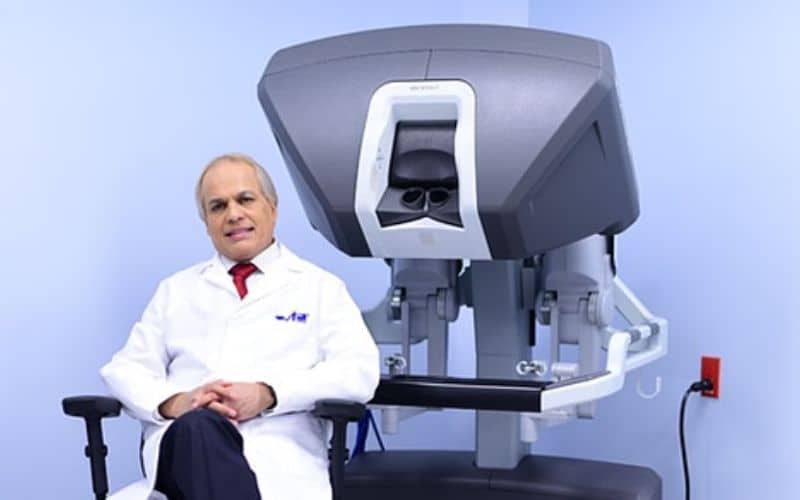
A robotic prostatectomy is a minimally invasive surgical procedure used to remove the prostate gland and surrounding tissues in men diagnosed with localized prostate cancer. The procedure is performed utilizing the advanced da Vinci robotic system, which acts as a highly precise extension of the surgeon’s own hands. Instead of the large, muscle-cutting incision required by traditional open surgery, the robotic approach relies on a few tiny, keyhole incisions in the lower abdomen.
Through these small ports, a high-definition 3D camera and microscopic, articulated surgical instruments are inserted. The robotic interface grants the surgeon ten times magnification and an exceptional range of motion, far exceeding human capabilities. This allows for the meticulous dissection of the prostate away from delicate, adjacent structures. For the patient, this translation of advanced engineering means substantially less physical trauma to the body, minimal blood loss, a dramatically lower risk of complications, and the foundation for an expedited recovery.
How Long Does a Robotic Prostatectomy Take?
The overall duration of a robotic prostatectomy is a primary factor in how smoothly a patient transitions into the recovery phase. In the hands of a master surgeon, the procedure is highly streamlined.
The typical duration of the entire process includes several distinct phases:
Pre-Surgery Preparation (1 to 2 hours): This window includes administering anesthesia, establishing monitoring lines, and carefully positioning the patient to ensure optimal safety and access for the robotic system.
The Surgical Procedure (2 to 4 hours): In highly experienced hands, the actual surgical removal of the prostate is highly efficient, often taking under 90 minutes. Minimizing the time spent under anesthesia is critical, as shorter surgical times drastically reduce post-operative fatigue and accelerate initial physical stabilization.
Post-Surgery Recovery Room (1 to 2 hours): Immediately following the procedure, the patient is monitored in a private recovery suite as the anesthesia wears off and vital signs normalize.
While the typical duration falls within these ranges, the exact timeframe can vary depending on individual patient anatomy, the stage of the cancer, and the specific complexity of the case.
Step-by-Step Timeline of Robotic Prostate Surgery Recovery
- Day 1: The First 24 Hours
Because of Dr. Sanjay Razdan’s surgical finesse and minimally invasive approach, over 99% of his patients are well enough to leave the surgical facility or hospital within 24 hours of treatment, with many discharged in just 4 to 6 hours. On the first day, patients are encouraged to stand up and take light walks around their room. Early mobilization is essential to promote healthy circulation, stimulate the digestive tract, and prevent post-surgical blood clots. Pain is typically mild and highly manageable with standard medical care.
- Days 2 to 7: Initial Rest and Light Movement
During the first week at home, the focus is on steady healing. Patients spend this time resting but are advised to continue frequent, short walks around the house. A small, urinary catheter remains in place during these initial days to allow the new connection between the bladder and the urethra to heal seamlessly. Driving must be avoided during this first week, and patients should follow a balanced, fiber-rich diet while staying fully hydrated to optimize digestion.
- Days 7 to 10: Catheter Removal and Air Travel Clearance
This is a major milestone in the recovery journey. Patients return to Dr. Razdan’s office to have the urinary catheter removed. Thanks to advanced anatomical preservation, many patients experience an immediate return of bladder control within days of this appointment. For out-of-state and international medical tourism patients who flew to Miami for care, this is also the window where they are cleared for commercial air travel to return home.
- Weeks 2 to 4: Resuming Activity and Returning to Work
By the second and third weeks, normal daily energy levels begin to return. Most patients are cleared to resume driving and can return to light desk work or office duties within 2 to 4 weeks, depending on their individual physical demands. Walking distances can be increased, and light stretching can be incorporated into the daily routine.
- Weeks 4 to 6: Returning to Your Normal Routine
Between 4 and 6 weeks post-op, patients generally return to their full, pre-surgery daily lifestyles. The tiny incisions are completely healed with minimal scarring. At this stage, patients can gradually reintegrate normal physical exercises, though heavy lifting and intense core strains should still be managed carefully based on personalized clinical guidance.
- Three Months and Beyond: Full Functional Restoration
By the three-month mark, initial healing is complete, and the focus shifts to long-term quality of life. Regular follow-up appointments and PSA blood tests are conducted to monitor successful cancer control. Patients continue to see progressive improvements in their urinary and sexual health over the coming months as delicate pelvic tissues fully regenerate.
Factors That Affect Surgery Duration and Recovery
While advanced medical technology provides a substantial head start, the overall speed and success of a patient’s recovery timeline are influenced by several specific parameters:
Surgeon Expertise and High Volume: The experience of the operator is the most influential parameter in the recovery process. A high-volume surgeon who has performed over 10,000 surgeries possesses an intuitive understanding of pelvic anatomy, ensuring a precise, clean dissection that minimizes unnecessary tissue trauma.
Cancer Stage and Complexity: Localized, early-stage tumors allow for a more straightforward procedure, whereas advanced or high-risk cases may require extensive tissue management, which can naturally extend the internal healing timeline.
Pre-Operative Health and Muscle Tone: A patient’s age, baseline cardiovascular fitness, and pre-existing core muscle strength play a major role. Younger patients or those who regularly practice pelvic floor exercises prior to surgery tend to heal their internal support structures much faster.
Nerve and Sphincter Preservation: The utilization of strict nerve-sparing protocols prevents long-term shock to the fine urological pathways, defining the rate at which bladder control and potency return.
Advanced Techniques to Accelerate Recovery
Dr. Sanjay Razdan’s world-renowned success rates are built upon technical refinements that go far beyond standard da Vinci protocols, specifically designed to eliminate side effects and compress the recovery window.
Maximum Urethral Length Preservation (MULP)
Pioneered by Dr. Razdan, the MULP technique focuses on preserving the maximum possible length of the functional urethra during the removal of the prostate. Peer-reviewed urological studies have demonstrated that preserving this extra length provides a stronger internal valve, allowing the vast majority of patients to regain full urinary continence almost immediately or within a few days of catheter removal, effectively eliminating months of frustrating leaks.
The “Biological Wrap” (Human Amniotic Membrane)
Dr. Razdan made medical history as the first surgeon in the world to pioneer the use of the human amniotic membrane as a biological wrap around the delicate neurovascular bundles responsible for erections. This pristine, nutrient-rich tissue acts as an anti-inflammatory shield that reduces post-operative scarring and delivers essential growth factors, dramatically accelerating the return of erectile function in record time.
Benefits of Robotic Prostate Cancer Surgery
Choosing the da Vinci robotic platform under the guidance of a leading expert offers an array of patient-centric benefits over traditional open techniques:
Minimally Invasive Execution: Small keyhole ports result in significantly less post-operative pain and a reduced need for heavy prescription pain medications.
Minimal Blood Loss: The extreme precision of micro-instruments ensures a highly controlled surgical field, eliminating the need for blood transfusions.
Shorter Surgery and Anesthesia Time: Efficient surgical execution reduces the systemic stress placed on the heart and lungs during the procedure.
Rapid Return to Independence: Same-day or 24-hour discharge timelines allow patients to recover in the comfort and privacy of their own homes or private suites.
Superior Preservation of Vital Functions: Maximizes the long-term protection of urinary control, penile length, and natural sexual health.
Why Choose da Vinci Robotic Prostatectomy
The da Vinci system represents the absolute gold standard of modern urological care. By providing the surgeon with a crystal-clear, magnified view of the complex pelvic anatomy, it removes the physical limitations of human sight and hand tremors. When facing prostate cancer, settling for standard treatment can mean compromising on your future quality of life. Combining this advanced surgical precision with a world-class authority ensures the highest probability of complete cancer eradication while fully protecting your manhood, dignity, and independence.
Conclusion + CTA
A prostate cancer diagnosis requires immediate, decisive action, but it does not have to mean a prolonged pause from your life. Through the efficiency of the da Vinci robotic system and the breakthrough innovations pioneered by Dr. Sanjay Razdan—including the MULP technique and the world-first biological nerve wrap—patients can look forward to an expedited, smooth pathway to a total cure and a rapid return to normal activities.
CTA: Schedule a consultation today to learn more about robotic prostate cancer surgery and your personalized treatment plan.