


 WhatsApp
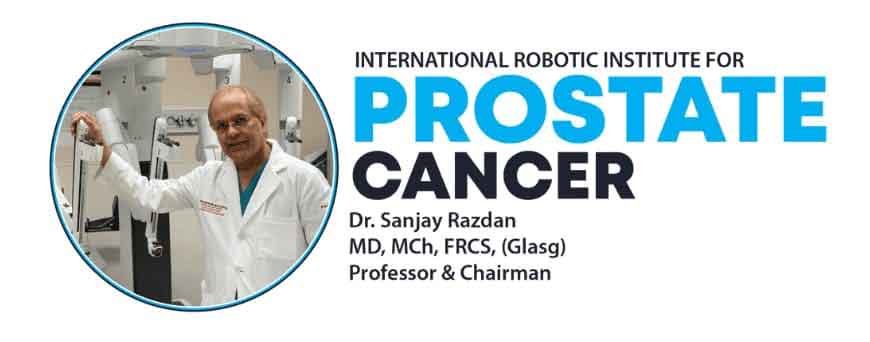


A prostate cancer diagnosis and subsequent radical prostatectomy represent a significant milestone in a man’s life. While the primary victory is the complete eradication of the cancer, the focus naturally shifts to what lies ahead. For many patients, the most urgent questions revolve around their daily routine: When can I return to my career? How soon can I travel? When is it safe to resume exercise?
At the International Robotic Prostatectomy Institute, Dr. Sanjay Razdan has set a global standard for functional recovery. Having performed over 10,000 successful procedures using the advanced da Vinci robotic system, Dr. Razdan combines technical mastery with unique structural innovations. This meticulous approach ensures that patients do not just survive cancer, but experience a swift, smooth transition back to their professional obligations and favorite personal activities. Let’s examine what a safe, optimized recovery timeline looks like and how to navigate life after a robotic prostatectomy.
The Early Days: Initial Post-Operative Healing
Because a robotic prostatectomy is a minimally invasive procedure, the immediate recovery phase is significantly shorter and more comfortable than traditional open surgery.
- The First 24 Hours: Most patients are well enough to be discharged to their home or private recovery suite within 24 hours—and in many cases, just 4 to 6 hours after surgery.
- Early Mobilization: On day one, the priority is gentle movement. Walking short distances around the room or house stimulates circulation, promotes respiratory health, and jump-starts the digestive tract.
- The Catheter Window: A small, internal urinary catheter remains in place for approximately 7 to 10 days to allow the connection between the bladder and urethra to heal seamlessly. During this week, patients focus on resting, staying fully hydrated, and taking brief, frequent walks.
Returning to Work Timeline
The exact time required before returning to professional duties depends heavily on the physical demands of your career.
Desk-Based and Remote Work (2 to 3 Weeks)
For men who work in an office setting or from a home computer, the return to work can be surprisingly rapid. Once the catheter is removed—typically between days 7 and 10—initial stamina begins to improve daily. Most patients are fully capable of returning to light desk work or a remote schedule within 2 to 3 weeks, provided they can take short breaks to stand up and stretch.
Light Physical Activity and Standing (3 to 4 Weeks)
If your profession requires prolonged standing, walking, or light moving (such as teachers, real estate professionals, or managers), a buffer of 3 to 4 weeks is generally recommended. This allows your core muscles to fully adapt and ensures that early post-surgical fatigue does not interfere with your productivity.
Heavy Labor and Physical Trades (6 Weeks)
For careers involving heavy lifting, construction, or intense physical exertion, safety requires a full 6 weeks of healing. Engaging in strenuous straining too early can place excessive internal pressure on the healing pelvic floor and surgical boundaries, risking complications.
Resuming Normal Daily Activities
Driving (1 to 2 Weeks)
Patients must avoid driving as long as the catheter is in place and while taking any prescription pain medications. Once the catheter is safely removed and you can comfortably press down on the brake pedal without abdominal pulling, you can resume driving.
Air Travel (7 to 10 Days)
For out-of-state and international patients who travel to Miami to see Dr. Razdan, clearance for commercial air travel is typically granted immediately following catheter removal. It is recommended to choose an aisle seat to allow for brief walks during longer flights to maintain healthy circulation.
Exercise and Fitness (2 to 6 Weeks)
- Weeks 1–3: Stick strictly to walking. Walking is the single best exercise during early recovery, as it keeps the body active without straining internal tissues.
- Weeks 4–6: Light cardiovascular exercises, such as using a stationary bicycle or swimming, can be gradually reintroduced based on personalized clinical guidance.
- Beyond Week 6: Standard weightlifting, running, and high-impact sports can be safely reintegrated as your core strength returns to baseline.
Advanced Surgical Refinements That Accelerate Your Life
The speed at which a patient reclaims their lifestyle is directly influenced by the precise technical steps taken during surgery. Dr. Sanjay Razdan has pioneered key refinements that actively protect a man’s quality of life.
Maximal Urethral Length Preservation (MULP)
Developed by Dr. Razdan, the MULP technique focuses on preserving the maximum possible length of the functional urethra during the removal of the prostate. Peer-reviewed data confirms that by keeping this natural valve structure intact, the vast majority of patients achieve an immediate or highly accelerated return to full, pad-free urinary continence upon catheter removal, avoiding months of frustrating leaks that can delay a return to work.
The “Biological Wrap” (Human Amniotic Membrane)
Dr. Razdan was the first surgeon in the world to introduce the use of human amniotic membrane as a biological wrap around the delicate neurovascular bundles responsible for erections. This nutrient-rich shield drastically minimizes post-operative inflammation and scarring, accelerating the nerve recovery process so that men can confidently reclaim their intimate life alongside their daily routine.
Why Surgeon Volume Dictates Your Freedom
The ultimate goal of a robotic prostatectomy is a complete cure accompanied by a rapid, uncompromised return to independence. Achieving this outcome requires an exceptional level of surgical precision that can only be built over thousands of hours. With a track record of over 10,000 robotic procedures, Dr. Razdan possesses the refined technique and anatomical intuition necessary to work efficiently, minimize internal tissue trauma, and compress your overall recovery timeline. Choosing an expert means choosing the shortest possible path between a cancer diagnosis and getting your life back.
Conclusion
A prostate cancer diagnosis does not mean putting your career, hobbies, or active life on permanent pause. Through the minimally invasive precision of the da Vinci robotic system and advanced, patient-centric protocols like the MULP technique, recovery is measured in weeks rather than months. Take the first step toward a definitive cure and a swift return to your normal routine by consulting with a premier global authority.