


 WhatsApp
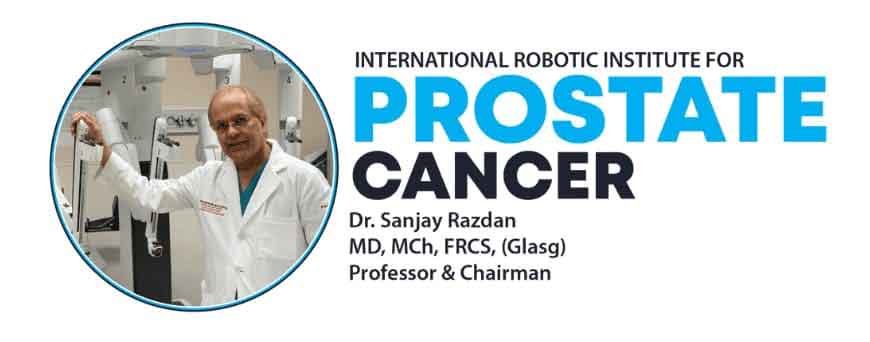


A prostate cancer diagnosis forces a man to navigate two equally critical priorities: completely eliminating the malignancy and preserving his long-term daily quality of life. While advancements in robotic technology have made radical prostatectomies safer and more precise, post-operative side effects—specifically urinary incontinence and perceived structural changes—remain a major source of anxiety for patients preparing for surgery.
To address these post-surgical challenges, Dr. Sanjay Razdan developed and pioneered the Maximal Urethral Length Preservation (MULP) technique in 2014. At the International Robotic Prostatectomy Institute in Miami, this proprietary anatomical approach has fundamentally changed post-operative recovery, establishing a new clinical standard for rapid bladder control and structural preservation.
The Anatomical Challenge of Prostatectomy
To understand the necessity of the MULP technique, it helps to examine the deep pelvic anatomy:
- The Urethra & Bladder Connection: The prostate gland sits directly beneath the bladder, completely surrounding the upper portion of the urethra (the tube through which urine flows).
- The Sphincter Complex: Urinary control is governed by the rhabdosphincter—a delicate muscular mechanism that wraps around the membranous urethra.
- The Surgical Trauma: During a standard radical prostatectomy, removing the prostate requires cutting the upper urethra away from the gland before reconnecting the remaining stump back to the bladder (vesicourethral anastomosis).
Traditional surgical approaches often truncate too much of the intraprostatic or apical urethra to simplify the dissection. Shortening this functional urethral stump damages the sphincter mechanism, leading to prolonged post-operative urinary leaking (incontinence) and physical retraction of the anatomical structures.
How the MULP Technique Works
The MULP procedure alters the standard surgical pathway through meticulous, high-magnification retroapical dissection. Utilizing the da Vinci robotic console, Dr. Razdan carefully unroofs and isolates the full length of the intraprostatic and membranous urethra down to the absolute anatomical millimeter.
[Traditional Approach] ──> Truncates functional urethral length ──> Prolonged leaking & tissue retraction
VS.
[Dr. Razdan’s MULP] ──> Preserves maximum urethral stump ──> Rapid continence & structural integrity
Key anatomical advantages of the MULP technique include:
- Sphincter Protection: It minimizes surgical trauma to both the smooth and striated muscular components of the urethral sphincter, as well as their supporting micro-nerves.
- Superior Anastomosis: Preserving a longer urethral stump allows for a tension-free reconnection between the bladder and urethra, providing better baseline support to the bladder base and preventing internal descent.
- Versatile Application: Unlike nerve-sparing techniques Journal of Endourology—which may be clinically impossible if the cancer has spread outside the capsule (extraprostatic extension)—MULP can be reliably performed on virtually every patient regardless of prostate size or tumor stage.
Primary Clinical Benefit: Rapid Return of Urinary Continence
The primary reason Dr. Razdan introduced the MULP technique was to eliminate prolonged pad dependency. Clinical outcomes published in peer-reviewed journals, such as the Journal of Endourology, demonstrate dramatic improvements in recovery timelines:
- Immediate / Early Dryness: Many patients achieve total, pad-free bladder control within days to weeks of having their temporary urinary catheter removed.
- 3 to 6-Month Rates: Over 96% to 99% of patients who undergo the MULP protocol achieve complete urinary control within 3 to 6 months post-surgery.
- Long-Term Protection: Chronic incontinence beyond six months is exceptionally rare under Dr. Razdan’s high-volume care.
Secondary Clinical Benefit: Preservation of Penile Length
While MULP was initially developed to restore bladder control, ongoing clinical research revealed an equally important secondary benefit: preserving natural penile length.
Post-prostatectomy penile shortening is a well-documented side effect in urology, historically affecting 63% to 100% of men following radical surgery due to tissue retraction and muscular scarring. In a landmark study published in the Journal of Robotic Surgery, Dr. Sanjay Razdan demonstrated that the MULP technique directly prevents post-operative penile shortening:
- Anatomical Support: By maximizing the length of the urethral stump and preserving the surrounding structural tissues, MULP prevents the internal retraction of the penile shaft.
- Proven Preservation: Over 80% of patients evaluated had zero change in post-operative stretched flaccid penile length, making MULP the only surgical technique clinically proven to preserve both urinary control and anatomical size simultaneously.
Comparing Outcomes: Standard Surgery vs. The MULP Technique
| Recovery Variable | Traditional Robotic Approach | Dr. Razdan’s MULP Protocol |
| Urethral Dissection | Truncated to simplify access | Maximum preservation of functional length |
| Median Time to Continence | Often 22+ weeks (months of pads) | 3 to 4 weeks (many within days) |
| 6-Month Continence Rate | Variable (typically 80-87%) | 98% to 100% complete dryness |
| Impact on Penile Length | High likelihood of shortening (63–100%) | 80%+ show zero change in length |
Conclusion
Recovering from prostate cancer should not mean sacrificing your dignity or long-term bodily confidence. Through the structural innovation of the MULP technique, Dr. Sanjay Razdan has revolutionized post-prostatectomy care, allowing men to achieve an immediate or fast-tracked return to full urinary control while actively protecting their natural anatomy.
Contact the International Robotic Prostatectomy Institute today by calling 305-251-8650 to schedule a comprehensive evaluation with Dr. Sanjay Razdan and discover how the MULP technique can protect your recovery.