


 WhatsApp
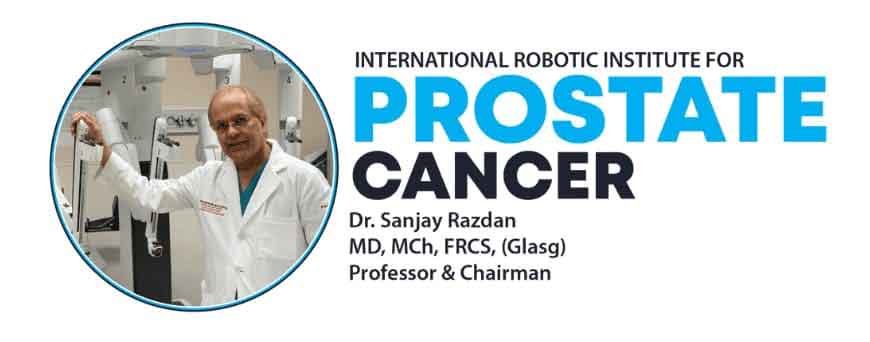




Revolutionary Amniotic Membrane Procedure Developed by Dr. Razdan
Helps Achieve “Earlier” Return of Sexual Function & Urinary Control!
“The world’s first prospective randomized study using Human Amniotic Membrane in post robotic radical prostatectomy patients was completed at the International Robotic Institute for Prostate Cancer in Miami, Florida, with the last patient enrolled in November 2013.” To date, thousands of prostate cancer patients have benefited from this procedure.
Since the original study in 2012-2013, Dr. Razdan has performed over 5,000 amniotic membrane placements. He is the FIRST SURGEON IN THE WORLD TO PIONEER AND USE Human Amniotic Membrane in patients with prostate cancer undergoing robotic prostate surgery and is the WORLD’S LEADER when it comes to this surgical technique.
We will explore the innovative use of Amniotic Membrane. Amniotic Membrane is a remarkable natural biological material utilized by one of the most experienced robotic surgeons in the world.
You will learn about Dr. Sanjay Razdan, a renowned prostate cancer surgeon based in Miami and a pioneer in robotic prostatectomy, who has performed over 10,000 procedures.
Let’s discover how Dr. Sanjay Razdan, a leading specialist in Miami, is integrating amniotic membrane into advanced surgical care.
His research has led to significantly improved results in terms of early return of urinary continence and erectile function, sometimes within days after robotic prostate removal. Dr. Razdan was awarded the FIRST PRIZE for his original research on the use of HUMAN AMNIOTIC MEMBRANE in robotic prostate surgery at the World Congress of Endourology and Robotic Surgery in Taiwan in 2014. He published his findings in the Journal of Robotic Surgery in 2019.
Dr. Razdan’s Robotic Prostate Surgery is truly unique, especially his technique of MAXIMAL URETHRAL LENGTH PRESERVATION (MULP), which has resulted in the majority of his patients having full urinary control almost immediately after catheter removal. His data on MULP was published in August of 2014 in the Journal of Endourology. Dr. Razdan was the first urologist in the world to establish an intra-operative grading system for extent of nerve preservation during Robotic Assisted Radical Prostatectomy and published his findings in the Indian Journal of Urology. This, combined with his novel technique of nerve preservation and use of human amniotic membrane, has resulted in EXCELLENT OUTCOMES IN TERMS OF PRESERVATION OF URINARY CONTINENCE AND ERECTILE FUNCTION.
To date, thousands of males have benefited from Dr. Razdan’s unique Robotic Prostatectomy Procedure with Human Amniotic membrane placement. You can find hundreds of real patient testimonials from patients all over the United States and around the world testifying to their exceptional outcomes and now living life prostate cancer free. The testimonials are in both English and Spanish. You can also view the countless 5-star Google reviews patients have given to Dr. Razdan and the team at the International Robotic Institute for Prostate Cancer.
A New Dawn in Post-Surgical Recovery: The Amniotic Membrane Revolution
Imagine a surgical tool that isn’t made of steel or robotics but rather a delicate natural barrier designed to enhance healing and provide protection. This tool is the Amniotic Membrane. Dr. Sanjay Razdan utilizes the Amniotic Membrane to improve patient outcomes worldwide.
Dr. Razdan is recognized as a global authority with experience performing over 10,000 robotic prostatectomies. Even with advanced nerve-sparing techniques, the fragile neurovascular bundles are crucial for maintaining erectile function and urinary continence, as they are at risk of trauma, inflammation, and scarring from surgery. Dr. Razdan believed that a biological bandage containing natural healing factors could offer an essential layer of protection.
The Amniotic Membrane is a powerhouse of growth factors and cytokines that can be beneficial in:
Reducing inflammation:
The amniotic membrane creates an optimal environment for nerve recovery and helps shield them from the inflammatory response that naturally follows surgery.
Prevent Scar Tissue:
The amniotic membrane can inhibit scar formation, thereby keeping nerve pathways clear and functional.
Promote Nerve Regeneration
Growth factors can enhance the healing and regeneration of essential nerve tissue. By integrating this nature-based innovation into his highly specialized robotic surgical procedures, including Maximum Urethral Length Preservation (MULP), Dr. Razdan has established a gold standard for maximizing the quality of life and survivorship after prostate cancer treatment.
This presentation will delve into the science and impressive clinical outcomes of the Amniotic Membrane, highlighting Dr. Razdan’s goal of achieving the optimal “trifecta” outcome: cancer cure, continence, and sexual function.
Frequently Asked Questions for Amniotic Membrane
Question 1. What is the amniotic membrane?
Answer. The amniotic membrane is a thin, innermost layer of the placenta consisting of biological material that is discarded after birth. This tissue contains numerous growth factors and is now considered a biological allograft capable of supporting tissue healing and regeneration in the surgical setting.
Question 2. Why does Dr. Razdan use Amniotic Membrane during robotic prostatectomy?
Answer. Dr. Sanjay Razdan was the first to utilize it to wrap the neurovascular bundles. The function is to mediate a protective effect, reduce inflammation, prevent fibrous scarring formation, and maximize recovery of erectile function and urinary control.
Question 3: What are the main benefits of using this membrane after prostate cancer surgery?
Answer. With this membrane, patients usually experience a faster return to potency and a quicker recovery of urinary continence compared with those who do not receive the allograft.
Question 4. Is the Amniotic Membrane safe, and are there any risks?
Answer. Yes, the dehydrated human amniotic/chorionic membrane (dHACM) is processed safely and rigorously tested. It is a biologically inert graft with a very low risk of rejection or reaction when used as a surgical adjunct.
Question 5. Does the use of Amniotic Membrane impact cancer outcomes?
Answer. Clinical data suggest the use of Amniotic Membrane does not adversely impact oncological outcomes (cancer control or recurrence rates). This is purely used as an adjunct to provide improved functional recovery from the prostatectomy.