


 WhatsApp
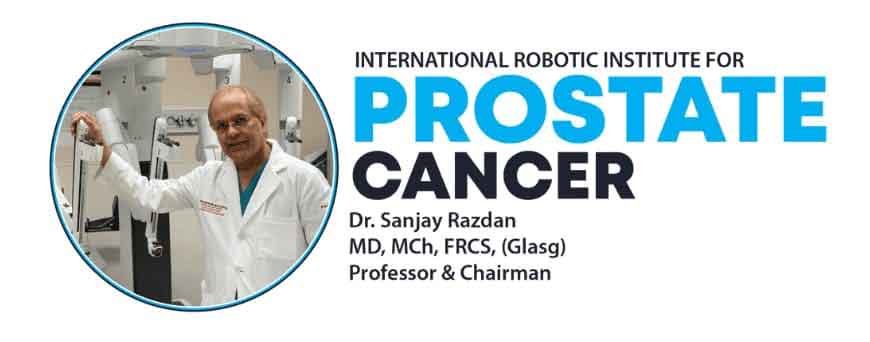




Dr. Razdan is considered one of the best Robotic Surgeons in the world.
What is Robotic Prostatectomy?
Dr. Razdan’s technique of MULP & Clipless Nerve Preservation?
Dr. Razdan’s Unique Clipless Nerve Preservation
da Vinci® Robotic Prostatectomy: A Minimally Invasive Surgical Procedure
When facing a diagnosis of prostate cancer, it is essential to learn about all treatments and surgical options. If your doctor recommends surgery to treat your prostate cancer, you may be a candidate for the gold standard in prostate surgery, Robotic Prostatectomy. The Robotic Prostatectomy procedure in the hands of an experienced surgeon like Dr. Razdan translates into better cancer control and better outcomes in terms of your quality of life after surgery. Dr. Razdan has been a pioneer and leader in developing techniques to augment the prompt return of urinary incontinence (MULP technique) and faster recovery of erectile function while maintaining penile length. To date, he has successfully performed over 10,000 procedures.
“Dr. Razdan’s Robotic Prostate Surgery with Human Amniotic Membrane and maximal urethral length preservation (MULP) is truly unique, resulting in EXCELLENT OUTCOMES IN TERMS OF PRESERVATION OF URINARY CONTINENCE AND ERECTILE FUNCTION.”
Featured on SurvivorNet: Surgery for Advanced Prostate Cancer: A Changing Playbook
First Time in the World Revolutionary Procedure Developed by Dr. Razdan Saves Patients’ Sex Lives
Primera Vez en el Mundo Procedimiento Revolucionario Desarrollado por el Dr. Razdan Los pacientes Guarda Vidas Sexuales
Am I a good candidate for the da Vinci® Robotic Prostatectomy?
Men who are diagnosed with prostate cancer that is localized are excellent candidates for this procedure. Dr. Razdan leads all other South Florida Surgeons in the number of Robotic Prostatectomies performed as well as outcomes concerning cancer control, erectile function, and urinary continence. With over 10,000 satisfied patients, we have the testimonials to back our claims.
For most patients, da Vinci® Robotic Prostatectomy Surgery offers numerous potential benefits over open prostatectomy, including:
- Shorter Hospital Stay
- Minimal Pain
- Less Risk of Infection
- No Blood Transfusions
- Less Scarring
- Faster Recovery
- Quicker Return to Normal Activities
- Excellent Urinary Control
- Excellent Erections
Prostate cancer is one of the most common cancers affecting men; however, with early diagnosis and treatment, it is highly curable. One of the most advanced and minimally invasive options for prostate cancer surgery is robotic prostatectomy.
Robotic prostatectomy, also known as robot-assisted laparoscopic prostatectomy, is a procedure used to remove the prostate gland in men diagnosed with prostate cancer. This procedure is performed using a robotic surgical system, with the da Vinci Surgical System among the most common.
The surgeon controls the robot from a console, enabling greater precision than traditional manual methods. By manipulating the robotic arms with small and precise movements, the surgeon can perform delicate surgeries, such as prostatectomy, while minimizing the risk of damage to nearby tissues, including the nerves responsible for erectile function.
What are the Risks and Complications of Robotic Prostatectomy?
Generally, robotic prostatectomy is performed due to its numerous advantages, but like any surgery, it comes with some risks. Some risks and complications of robotic-prostectomy may include:
- Bleeding can occur during the procedure. Blood loss in robotic prostatectomy is minimized in comparison to open surgery.
- Some men can experience temporary or long-term urinary incontinence after the surgery. Incontinence can occur if the muscles or nerves controlling the bladder are damaged during the procedure.
- There can be a small risk of infection at the surgical site or in the urinary tract.
- One may experience post-operative blood clots. These clots occur in patients who remain immobile for extended periods after the surgery.
- Some may experience damage to the nerves that are responsible for erectile function. Nerve-sparing techniques are used to minimize the risk of incontinence.
Recovery and Aftercare
In comparison to traditional surgery, robotic prostatectomy has a shorter recovery time. In most cases, patients stay in the hospital for just one or two days. Recovery from prostate cancer surgery can involve different stages:
1. Immediately After Surgery
In this period, patients are monitored for signs of complications such as bleeding, infection, or blood clots. A catheter is usually placed in the bladder to allow drainage and promote healing.
2. Post-Operative Pain Management
Most patients experienced pain after surgery; some may experience mild or moderate pain, which can be managed with medications. The pain is usually managed within a few days.
3. Return to Normal Activities
Most men resume light activities after 2 to 4 weeks and return to work in 4 to 6 weeks. Initially, physical activity should be limited to allow for proper healing.
4. Follow-Up Care
PSA tests will be conducted after surgery to monitor for signs of recurrence. Following up on urinary and erectile function is crucial for assessing recovery.
Conclusion
Robotic prostatectomy is an advanced surgical technique that offers many benefits over traditional prostatectomy, such as less pain, shorter recovery times, and greater precision. Like any other surgical procedure, it can carry risks. Before considering robotic prostatectomy, it is advised to consult an experienced prostate cancer surgeon, like Dr. Sanjay Razdan.
If you have been diagnosed with prostate cancer and are considering surgery, robotic prostatectomy offers effective results.
Consult Dr. Sanjay Razdan to achieve optimal results with minimal disruption to your life.
To schedule a consultation with Dr. Razdan, contact us today.
Frequently Asked Questions:
Question 1. Can robotic prostatectomy cause erectile dysfunction?
Answer. There can be a risk of erectile dysfunction; nerve-sparing techniques are used during robotic prostatectomy that can help preserve erectile function in most men.
Question 2. How long does a robotic prostatectomy surgery take?
Answer. Robotic prostatectomy typically takes 2 to 4 hours, depending on the complexity of the procedure and the patient’s individual condition.
Question 3. Is robotic prostatectomy better than traditional open surgery?
Answer. Yes, robotic prostatectomy offers advantages like smaller incisions, faster recovery, less pain, and fewer complications compared to traditional open surgery.
Question 4. What is the recovery time after a robotic prostatectomy?
Answer. Patients generally recover in 1 to 2 weeks for basic activities, and can return to more strenuous activities in 4 to 6 weeks, though full recovery can take a few months.