


 WhatsApp

When faced with a cancer diagnosis, the choice of your treating physician is arguably the single most critical decision you will ever make. In surgical oncology—particularly in complex, delicate fields like robotic urology—technology is only as good as the person operating it. While advanced robotic systems provide high-definition magnification and micro-instrumentation, the machine does not make clinical decisions, sense subtle tissue resistance, or adjust to unpredictable patient anatomy.
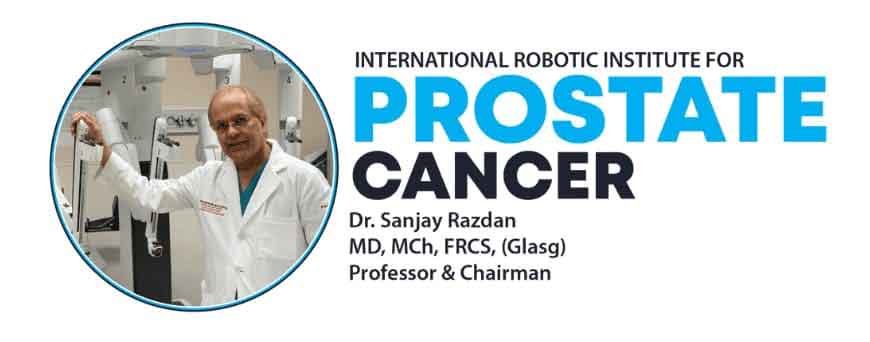
At the International Robotic Prostatectomy Institute in Miami, Dr. Sanjay Razdan stands as one of the world’s most experienced robotic prostate cancer surgeons. Having personally completed over 10,000 successful robotic procedures, Dr. Razdan demonstrates why high surgical volume and specialized experience directly translate to superior oncological outcomes and a preserved quality of life.
Understanding the “Volume-Outcome” Relationship
In medicine, the connection between a surgeon’s case volume and patient success is known as the volume-outcome relationship. Decades of peer-reviewed clinical research consistently show that hospitals and surgeons handling a high volume of specific surgical cases achieve dramatically better results than low-volume providers.
In radical prostatectomy surgery, an experienced, high-volume surgeon delivers distinct clinical advantages:
- Lower Risk of Positive Surgical Margins: Achieving “clean” or negative margins means no cancer cells are left behind along the edge of the removed tissue, drastically reducing the need for secondary treatments like radiation or hormone therapy.
- Fewer Intraoperative Complications: High-volume operators anticipate anatomical variations, preventing accidental injury to adjacent blood vessels, the rectum, or the bladder.
- Shorter Anesthesia Times: Master surgeons execute procedures with refined efficiency—often under 90 minutes—minimizing cardiovascular and pulmonary strain on the patient.
The “Trifecta” in Prostate Cancer Surgery
In modern urologic oncology, simply removing the tumor is not enough. The gold standard of success is achieving the Surgical Trifecta:
- Complete Cancer Eradication: Eradicating the cancer with clear margins and maintaining an undetectable PSA level post-operatively.
- Urinary Continence: Preserving the internal sphincter mechanism so the patient returns to total, pad-free bladder control.
- Sexual Potency: Protecting the microscopic neurovascular bundles responsible for natural erections.
Achieving all three elements requires an intimate understanding of pelvic anatomy that can only be built over thousands of surgical cases.
Pioneering Innovations Driven by Experience
An experienced surgeon doesn’t just master existing techniques—they innovate to improve patient care. Throughout his career, Dr. Sanjay Razdan has introduced pioneering structural methods designed specifically to optimize post-operative recovery:
1. Maximal Urethral Length Preservation (MULP)
Post-surgical urinary leaking often occurs when too much of the functional urethra is truncated during prostate removal. Dr. Razdan developed his proprietary MULP technique to meticulously preserve the maximum possible length of the urethral structure. This precise dissection allows a vast majority of his patients to achieve an immediate or highly rapid return to pad-free dryness after catheter removal.
2. The World’s First Amniotic Membrane Nerve Wrap
Dr. Razdan was the first surgeon in the world to utilize a human amniotic membrane biological wrap around the spared neurovascular bundles during robotic prostatectomy. This biological shield downregulates local inflammation, prevents scarring (adhesions) around the nerve beds, and releases essential growth factors that accelerate the recovery of natural erectile function.
3. Athermal, Clipless Dissection
Heat from electrocautery devices can cause “thermal spread,” permanently shocking nearby nerves. Dr. Razdan utilizes an athermal (heat-free) and clipless protocol near the nerve beds, peeling tissue away using cold micro-instruments to prevent nerve shock and mechanical pinching.
Low-Volume vs. High-Volume Surgical Care
| Metric / Experience Factor | Low-Volume Provider | Dr. Sanjay Razdan (10,000+ Cases) |
| Console Operator | Often shared with trainees/residents | 100% Dr. Razdan personally |
| Surgical Margin Safety | Variable; higher risk of positive margins | High precision targeting clear margins |
| Continence Preservation | Prolonged pad dependency (months to years) | MULP Technique for rapid/immediate dryness |
| Potency Protection | Standard thermal cautery risk | Athermal dissection + Amniotic Wrap |
| Procedure Efficiency | 2 to 4+ hours under anesthesia | Consistently completed in under 90 minutes |
Conclusion
When facing prostate cancer, settling for standard or low-volume care can introduce unnecessary risks to both your survival and your long-term independence. Choosing a world-renowned specialist like Dr. Sanjay Razdan ensures your procedure is guided by unmatched technical discipline, innovative biological care, and a proven track record of thousands of successful recoveries.
Contact the International Robotic Prostatectomy Institute today at miamiroboticprostatectomy.com or call 305-251-8650 to schedule a comprehensive evaluation with Dr. Sanjay Razdan and secure your personalized recovery plan.