


 WhatsApp

When patients hear “prostate cancer,” one of the first questions is:
“What are my chances?”
Success rate. Survival rate. Cure rate.
But here’s where things get confusing.
Most statistics online are broad. General. Population-based.
And while they’re useful, they don’t always reflect what matters most to an individual patient.
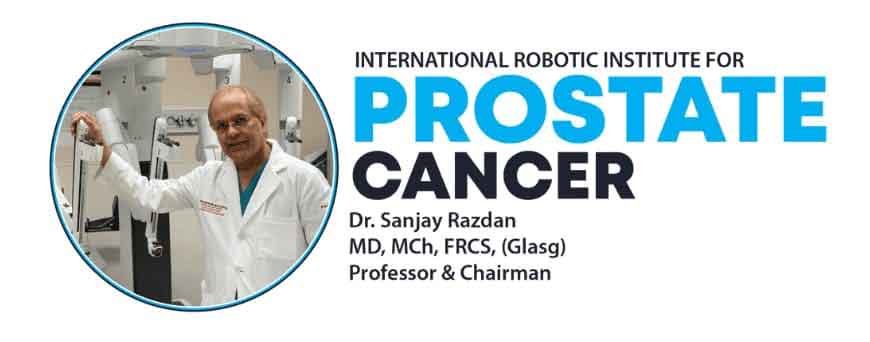
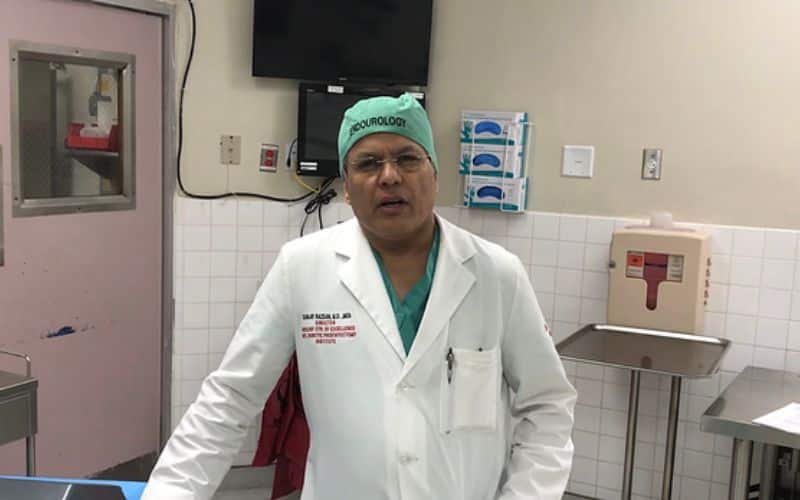
At the Miami Robotic Prostatectomy Center, Dr. Sanjay Razdan approaches this conversation differently.
Not just with numbers.
But with context — because success in prostate cancer treatment isn’t just about survival.
It’s about how you live after treatment.
What “Success Rate” Actually Means in Prostate Cancer
Most patients assume success = cancer is gone.
That’s part of it.
But in modern prostate cancer care, success is usually measured in three ways:
- cancer control (no recurrence)
- urinary continence
- erectile function
This is often referred to as the “trifecta” outcome.
Because treating cancer alone isn’t enough if quality of life is significantly affected.
The Good News: Survival Rates Are High
For most men diagnosed with prostate cancer — especially when caught early — outcomes are very strong.
In many localized cases:
- long-term survival rates are very high
- cancer can often be completely removed or controlled
- progression is slow compared to many other cancers
This is why treatment decisions are not rushed blindly.
They are planned carefully.
Because outcomes are already favorable — and the focus shifts to how well the treatment is done.
Why Not All “Success Rates” Are Equal
This is where patients often misunderstand statistics.
You might read:
“Prostate cancer surgery has high success rates.”
That’s true.
But it doesn’t tell you:
- how many patients regain continence quickly
- how many recover erectile function
- how many experience complications
- how long recovery takes
Those details vary significantly depending on:
the surgeon performing the procedure
How Dr. Sanjay Razdan Changes the Conversation
Dr. Razdan doesn’t just focus on removing cancer.
His approach is built around improving the full outcome.
He has performed thousands of robotic prostate surgeries and is known internationally for techniques that prioritize:
- nerve preservation
- continence recovery
- functional outcomes
Patients who come to Miami often do so because they understand:
the surgeon matters more than the statistics.
Surgical Technique Directly Affects Outcomes
Two patients with the same diagnosis can have very different experiences after surgery.
The difference often comes down to technique.
Dr. Razdan uses advanced methods including:
- MULP (Maximum Urethral Length Preservation)
- refined nerve-sparing techniques
- use of human amniotic membrane to support healing
- precise anatomical reconstruction
These are not small details.
They directly influence:
- how quickly continence returns
- whether erectile function is preserved
- how smooth recovery feels
What Patients Can Realistically Expect After Treatment
This is where clarity matters.
Cancer Control
For many patients with localized prostate cancer:
- surgery is highly effective
- long-term cancer control is strong
- recurrence risk is low when treated appropriately
This is the baseline expectation.
Urinary Continence
Most patients experience some temporary changes early on.
But with advanced surgical technique:
- many regain control within weeks to months
- long-term continence rates are high
The key factor is how the surgery is performed.
Erectile Function
This is the most variable outcome — but also one of the most important.
With Dr. Razdan’s approach:
- nerve preservation is prioritized whenever safe
- recovery is often gradual over months
- outcomes are significantly improved compared to older techniques
And importantly:
erectile dysfunction is not an automatic outcome.
Why Patients Travel for Better Outcomes
Many patients choose Dr. Sanjay Razdan even if it means traveling.
Because they understand something critical:
You only get one chance at prostate surgery.
And the difference between:
- average outcomes
- optimized outcomes
can affect the rest of your life.
Patients are not just choosing treatment.
They’re choosing:
- experience
- technique
- long-term quality of life
The Role of Early Detection
Success rates are highest when prostate cancer is caught early.
That’s why screening and evaluation matter.
Early-stage diagnosis allows for:
- more treatment options
- better surgical outcomes
- higher likelihood of preserving function
This is another area where patient awareness plays a major role.
What Patients Should Focus On (Instead of Just Numbers)
Instead of only asking:
“What’s the success rate?”
Dr. Razdan encourages patients to ask:
- How many of these surgeries has my surgeon performed?
- What techniques are used to preserve function?
- What are realistic outcomes for someone like me?
- What does recovery actually look like?
Because those answers are more meaningful than general statistics.
Why “Success” Looks Different Today
Years ago, success meant surviving cancer.
Today, success means:
- living without cancer
- maintaining independence
- preserving confidence and quality of life
That shift is exactly what drives modern surgical approaches — including Dr. Razdan’s.
Frequently Asked Questions
What is the survival rate for prostate cancer?
For many early-stage cases, survival rates are very high, especially with proper treatment.
Is surgery the best option?
It depends on the patient, but surgery is often recommended for localized prostate cancer.
Will I regain urinary control?
Most patients do, especially when surgery preserves key structures.
Is erectile dysfunction guaranteed?
No. Modern techniques significantly improve the chances of recovery.
Why does surgeon experience matter so much?
Because technique directly affects both cancer control and quality-of-life outcomes.
Contact Dr. Sanjay Razdan
If you’ve been diagnosed with prostate cancer and want a clear understanding of your treatment options and expected outcomes, a consultation can help you make a confident decision.
Dr. Sanjay Razdan
Miami Robotic Prostatectomy Center
Website: https://miamiroboticprostatectomy.com
Phone: 1-305-251-8650
During your consultation, your case will be reviewed in detail, and you’ll receive a personalized explanation of success rates — based not just on statistics, but on your specific condition and the surgical approach being used.