


 WhatsApp

Erectile dysfunction (ED) is among the most prevalent conditions impacting male survivorship, self-confidence, and intimate relationships. The standard therapeutic pathway typically follows a conservative ladder: beginning with lifestyle modifications and oral phosphodiesterase type 5 (PDE-5) inhibitors like sildenafil or tadalafil, and escalating to vacuum constriction devices or intracavernosal injections (Trimix or Quadmix). For millions of men, however, conservative regimens eventually lose their effectiveness, cause unmanageable systemic side effects, or impose an artificial barrier to natural physical intimacy.
When medical and non-invasive options no longer provide erections sufficient for penetrative intimacy, penile prosthesis surgery represents the definitive, permanent gold standard. Deciding when to transition from medical management to a surgical solution is an important personal and clinical milestone that depends on underlying pathophysiology, treatment fatigue, and long-term quality-of-life objectives.
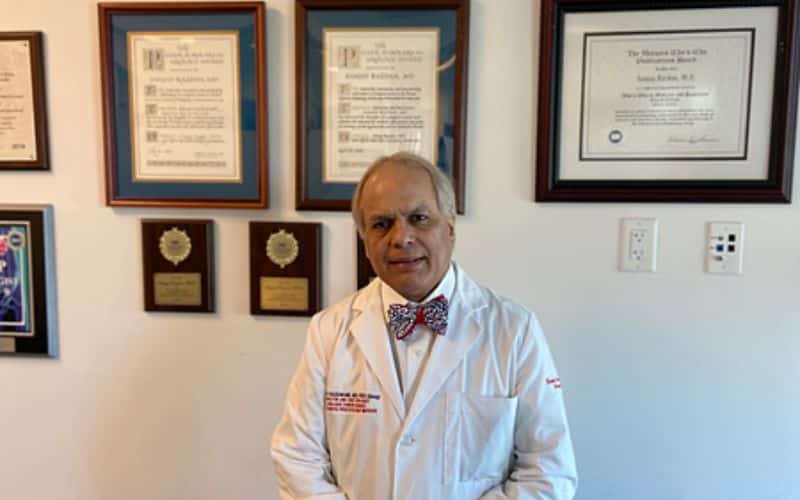
Practicing in Miami, Florida, Dr. Sanjay Razdan is a world-renowned urologic surgeon, Professor and Chairman of the International Robotic Institute for Prostate Cancer, and Director of Robotic Urology. Having completed more than 10,000 robotic and complex reconstructive urologic procedures, Dr. Razdan is globally recognized for his clinical expertise in post-prostatectomy rehabilitation, functional pelvic anatomy preservation, and advanced prosthetic surgery. Understanding when and why to consider surgical intervention helps men make confident, informed decisions to restore their sexual health.
Key Clinical Triggers: When Surgery Becomes the Right Choice
Penile prosthesis implantation is considered an end-stage, curative intervention rather than a first-line treatment. Patients should consider surgical evaluation when they meet one or more of the following clinical scenarios:
1. Permanent Neurological Injury After Pelvic Cancer Treatment
Men who have undergone radical prostatectomy, cystectomy, or external pelvic radiation for prostate or colorectal malignancies frequently experience trauma to the delicate cavernous nerves. While nerve-sparing techniques protect baseline anatomy, severe neuropraxia or non-nerve-sparing surgery can completely sever autonomic erectile signaling. If 12 to 24 months of structured penile rehabilitation fails to restore natural tumescence, oral pills cannot bridge the broken neural circuit. A penile implant bypasses the nervous system entirely, mechanically creating full rigidity on demand.
2. Severe Vascular Disease and Veno-Occlusive Dysfunction (“Venous Leak”)
Chronic metabolic diseases—including long-standing diabetes mellitus, systemic hypertension, and peripheral vascular disease—damage the delicate endothelial lining and microvascular capillary beds supplying the erectile chambers. Over time, corporal smooth muscle undergoes apoptosis and is replaced by stiff, inelastic collagen fibers. This process leads to veno-occlusive dysfunction (venous leak), where blood entering the penis cannot be trapped against the tunica albuginea. Because medications cannot seal a structural venous leak, surgical cylinders provide the only reliable method to achieve and maintain rigid erections.
3. Medication Burnout and Intolerance
Many men experience initial success with oral PDE-5 inhibitors only to find that their effectiveness declines over time as underlying vascular conditions progress. Others cannot tolerate the associated side effects—such as severe migraines, gastrointestinal reflux, facial flushing, or visual disturbances—or are strictly prohibited from taking them due to concurrent nitrate therapy for cardiovascular disease.
Similarly, intracavernosal injections (Trimix), while initially potent, carry high rates of long-term discontinuation. Men often develop needle fatigue, localized injection-site bruising, corporal fibrosis, or persistent fear of priapism (painful, prolonged erections requiring emergency room aspiration). When non-surgical treatments become an emotional burden, a penile prosthesis offers a maintenance-free alternative.
4. Peyronie’s Disease Combined with Erectile Failure
Peyronie’s disease is characterized by dense, fibrotic plaques forming within the tunica albuginea, producing severe penile curvature, painful erections, or hour-glass narrowing. When severe anatomical deformities coexist with underlying erectile dysfunction, isolated plaque-releasing procedures or plication surgeries often fail to yield a functional erection. Implanting a three-piece inflatable penile prosthesis serves a dual purpose: straightening the anatomical curvature while providing immediate, reliable rigidity.

How the Modern 3-Piece Inflatable Implant Works
The three-piece inflatable penile prosthesis (IPP) represents the gold standard in prosthetic urology due to its ability to simulate both complete rigidity and natural flaccidity:
- Internal Dual Cylinders: Two soft, bio-compatible silicone cylinders are placed surgically within the corpora cavernosa, completely replacing non-functional spongy tissue.
- Scrotal Pump: A miniature, soft control pump is positioned discreetly within the scrotum between the testicles, completely hidden under the skin.
- Pelvic Fluid Reservoir: A slender, low-profile fluid balloon containing sterile saline is positioned safely in the prevesical pelvic space.
To achieve an erection, the patient gently squeezes the scrotal pump several times. Fluid transfers from the reservoir into the cylinders, expanding them to create full girth and rigidity. The erection remains completely rigid for as long as desired. After intercourse, pressing the release valve on the pump routes fluid back into the reservoir, returning the penis to a soft, natural flaccid state.
Comparative Overview: Stepped ED Therapies vs. Penile Implantation
| Feature | Oral PDE-5 Inhibitors | Intracavernosal Injections (ICI) | Inflatable Penile Prosthesis (IPP) |
| Mechanism | Biochemical vessel dilation | Pharmacologic smooth muscle relaxation | Internal fluid mechanical cylinders |
| Spontaneity | Requires 30–60 min pre-planning | Requires immediate pre-intimacy needle injection | Immediate erection on demand (Seconds) |
| Reliability | Variable; diminishes with disease progression | High, but carries risk of priapism or dosing failure | 100% mechanical reliability on every use |
| Erectile Duration | Unpredictable; relies on continuous arousal | 30 to 90 minutes (Fixed) | Controlled entirely by the patient |
| Sensory Preservation | Intact baseline sensation | Intact baseline sensation | Fully preserved; skin & nerves untouched |
| Partner Satisfaction | 50% to 65% satisfaction | 60% to 70% satisfaction | Consistently exceeds 90% to 95% |
Frequently Asked Questions (FAQ)
Does penile implant surgery affect my ability to feel pleasure or reach an orgasm?
No. The surgical placement of an inflatable penile prosthesis is entirely confined within the deep corporal cavernosal chambers. The sensory nerves, blood vessels, and skin that control penile sensitivity, tactile pleasure, and orgasmic climax run along the outer dorsal surface of the penis and are completely untouched during surgery. Climax sensation remains identical to your baseline.
Will anyone be able to tell that I have an implant when I am undressed?
No. Every component of the three-piece prosthesis is contained entirely inside the body. There are no external parts, visible tubing, or batteries. In the flaccid state, the penis rests naturally against the body, making the implant completely undetectable in locker rooms, showers, or during casual daily activities.
What is the typical surgical and recovery experience?
The implantation is a straightforward outpatient procedure taking approximately 45 to 60 minutes under general or spinal anesthesia. Most patients experience mild-to-moderate scrotal swelling and discomfort managed with oral analgesics for several days. After four to six weeks, internal healing is complete, the device is formally activated during an in-office appointment, and the patient is cleared to resume full sexual intimacy.
Conclusion
Deciding to pursue surgical treatment for erectile dysfunction is not an admission of defeat; it is a proactive step toward reclaiming sexual independence and intimacy. When oral medications, injections, and non-surgical therapies have reached their limits, a penile prosthesis provides a reliable, long-term solution with the highest satisfaction rates in sexual medicine. Consulting with an experienced reconstructive urologist ensures a precise anatomical evaluation and an individualized surgical plan.
Schedule a Fast-Track Second Opinion with Dr. Sanjay Razdan
Whether evaluating advanced robotic solutions for localized or high-risk prostate cancer, managing disease recurrence after prior radiation, or seeking definitive surgical restoration for severe erectile dysfunction, surgeon volume and technical mastery are paramount. With a personal surgical record of more than 10,000 robotic and urologic procedures performed, Dr. Sanjay Razdan provides thorough, personalized evaluations and fast-track clinical consultations for patients locally in South Florida, across the United States, and internationally.
- Expedited Consultations: Fast-track scheduling for in-person evaluations in Miami/Doral, alongside secure virtual record reviews for traveling patients.
- Comprehensive Reconstructive & Oncologic Care: Global leadership in nerve-sparing robotic prostatectomy, penile prosthesis implantation, and complex salvage resections.
- Practice Location: International Robotic Prostatectomy Institute, 3650 NW 82nd Ave, Suite 501, Doral, FL 33166
- Direct Consultation Line: (305) 251-8650
- Online Consultation Portal: miamiroboticprostatectomy.com