


 WhatsApp

Receiving a prostate cancer diagnosis can be an incredibly overwhelming experience, leaving men and their families to navigate a complex array of medical terminology and treatment pathways. One of the most critical turning points in this journey is determining the speed and aggressiveness of the disease. For slow-growing, low-risk tumors, conservative approaches such as active surveillance or watchful waiting are often excellent choices that prevent overtreatment. However, when the pathology reveals high-risk, aggressive prostate cancer, treating the disease passively can be a dangerous gamble.
At the International Robotic Prostatectomy Institute, Dr. Sanjay Razdan emphasizes that time is a critical variable when confronting fast-moving tumors. As one of the most experienced robotic urologic oncologists globally, with a history of over 10,000 successful procedures, Dr. Razdan understands that an aggressive diagnosis requires an equally decisive cure. Opting for a delayed approach with an aggressive tumor can allow the cancer to escape the prostatic capsule, severely limiting the chance of a total cure. Let’s explore what defines robotic prostatectomy, why watchful waiting fails in the face of aggressive disease, and how advanced surgical techniques optimize your recovery timeline.
What is Robotic Prostatectomy?
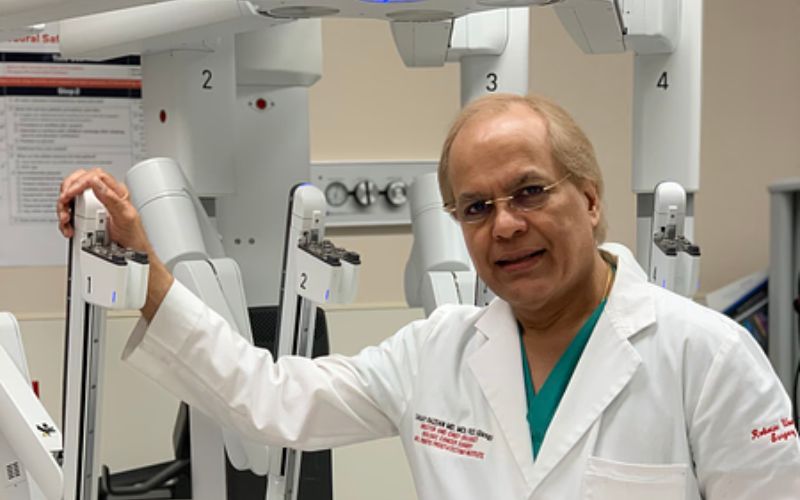
A robotic prostatectomy is a highly advanced, minimally invasive surgical procedure designed to completely remove the prostate gland and adjacent tissues affected by prostate cancer. The procedure is performed using the cutting-edge da Vinci robotic system, which transforms the surgical field by acting as a highly precise extension of the surgeon’s hands. Instead of the large, muscle-splitting incision characteristic of traditional open surgery, the robotic approach utilizes a few tiny, keyhole ports in the lower abdomen.
Through these micro-incisions, the surgeon inserts a high-definition 3D camera and specialized, articulated robotic instruments. The da Vinci interface grants the surgeon ten times magnification and a range of motion that far exceeds the physical capabilities of human hands. This extreme level of visibility and mechanical control is vital for a meticulous dissection, allowing the surgeon to isolate and remove cancerous tissue while carefully avoiding adjacent pelvic muscles, blood vessels, and nerve pathways. For the patient, this translation of medical engineering means minimal blood loss, a significantly lower risk of complications, and a dramatically accelerated post-operative recovery.
How Long Does a Robotic Prostatectomy Take?
The overall duration of a robotic prostate surgery is an important consideration for patients preparing for treatment. In highly experienced hands, the entire process is highly organized and efficient, minimizing the total physiological strain on the body.
The typical duration of the surgical experience encompasses three distinct phases:
Pre-Surgery Preparation (1 to 2 hours): This phase is dedicated to safely administering anesthesia, placing necessary monitoring lines, and meticulously positioning the patient to ensure optimal access for the robotic system.
The Surgical Procedure (2 to 4 hours): In the hands of a master surgeon like Dr. Razdan, the actual removal of the prostate is remarkably efficient, frequently taking under 90 minutes. Minimizing the time spent under anesthesia is vital, as shorter surgical times drastically reduce post-operative fatigue and accelerate your initial recovery.
Post-Surgery Recovery Room (1 to 2 hours): Immediately following the procedure, patients are monitored closely in a private recovery suite as the anesthesia dissipates and vital signs completely stabilize.
While the typical duration falls within these timelines, the exact duration can vary based on individual anatomical variations, the exact stage of the cancer, and the technical complexity of the case.
The Danger of Watchful Waiting for Aggressive Cancer
Watchful waiting is a passive management strategy where no immediate treatment is administered. Instead, the patient is monitored primarily for symptoms, and treatment is only initiated if the cancer causes pain, a urinary blockage, or other structural issues. While this is entirely appropriate for elderly patients with slow-growing tumors and a limited life expectancy, it can be a catastrophic choice for men facing aggressive, high-risk prostate cancer.
Aggressive tumors—often identified by high PSA levels, a rapid PSA doubling time, or a high Gleason score—are inherently volatile. Unlike slow-growing variants, aggressive cancer cells multiply rapidly and actively look to breach the outer prostatic capsule. Once the cancer escapes the prostate, it can spread to the regional lymph nodes, surrounding tissues, and ultimately the bones. Waiting for symptoms to appear before taking action means waiting until the cancer has likely metastasized. At that stage, a definitive surgical cure is no longer possible, and the patient must rely on lifelong systemic treatments like hormone therapy or chemotherapy to manage, rather than eliminate, the disease.
Step-by-Step Timeline of Robotic Prostate Surgery
When a patient moves forward with immediate surgical treatment instead of waiting, they enter a structured, safe, and highly efficient clinical pathway.
- Pre-Surgery Preparation
Upon arrival at the surgical facility, the patient is prepped by a dedicated urological nursing team. The anesthesia team administers general anesthesia, ensuring total comfort. The patient is then precisely positioned, and the da Vinci robotic arms are docked to the keyhole ports in the lower abdomen.
- Surgical Procedure
Dr. Razdan takes his place at the robotic console, gaining a crystal-clear, magnified 3D view of the pelvic structures. Using micro-instruments, he carefully separates the prostate from the bladder and the urethra. In localized cases, strict nerve-sparing techniques are deployed to protect sexual function. Once the prostate and relevant lymph nodes are removed, the bladder is seamlessly reconnected to the urethra over a temporary catheter.
- Post-Surgery Recovery Room
The patient transitions to the post-anesthesia care unit. Vital signs are monitored continuously as the patient gently wakes up. Because the incisions are tiny, post-operative discomfort is minimal. Most patients are up on their feet and walking within a few hours of surgery, and over 99% are discharged home or to their private recovery suites within 24 hours.
Hospital Stay After Robotic Prostatectomy
One of the most remarkable benefits of the da Vinci robotic prostatectomy over traditional open surgery is the minimal hospital stay required. Traditional open procedures often demand a grueling four-to-seven-day hospital admission due to the large muscle-cutting incisions and substantial blood loss.
With the advanced robotic approach, the hospital stay is usually limited to just one day, with many eligible patients qualifying for same-day discharge. Spending less time in a hospital bed drastically reduces the risk of hospital-acquired infections and post-surgical blood clots. It allows patients to begin their true healing journey in the comfort, privacy, and familiar surroundings of their own homes almost immediately.
Recovery Timeline After Robotic Prostate Surgery
The recovery timeline following an efficient robotic procedure is highly compressed, allowing men to regain their independence far faster than older surgical methods allowed.
First Few Days (Rest and Light Movement): Patients spend the initial 48 to 72 hours resting at home, interspersed with frequent, brief walks around the house to promote healthy circulation. A small urinary catheter remains in place to protect the healing internal connection.
1 to 2 Weeks (Resuming Light Activities): Between days 7 and 10, the patient returns to the office to have the catheter removed. Following removal, light daily activities can be resumed, and out-of-state patients are typically cleared for air travel.
4 to 6 Weeks (Return to Normal Routine): By this stage, internal healing is well advanced. Patients can return to full office work, resume driving, and gradually reintroduce standard cardiovascular exercises.
Full Recovery (Functional Optimization): Over the coming months, continuous improvements are seen in urinary control and sexual health. Regular follow-up appointments and PSA checks confirm complete cancer eradication.
Factors That Affect Surgery Duration and Recovery
While advanced robotics provide an exceptional clinical foundation, individual recovery rates and surgery duration are influenced by several specific parameters:
Cancer Stage: Localized tumors allow for a faster, more direct dissection, whereas advanced or high-risk cases require a more complex, meticulous approach to clear margins.
Overall Health: Pre-existing cardiovascular fitness, a healthy body mass index, and strong baseline core muscles support a faster healing process.
Surgeon Expertise: High-volume specialization is paramount. A surgeon with over 10,000 cases possesses the anatomical intuition necessary to work quickly and precisely, reducing tissue trauma.
Advanced Robotic Technology: Utilizing the latest da Vinci platforms ensures maximum visualization and technical capability throughout the procedure.
Benefits of Robotic Prostate Cancer Surgery
Choosing an immediate, robotic approach to eradicate aggressive prostate cancer provides clear advantages:
Minimally Invasive Execution: Tiny incisions result in less pain, less scarring, and a reduced need for narcotic pain medications.
Minimal Blood Loss: Exceptional precision minimizes trauma to major pelvic blood vessels, virtually eliminating the need for blood transfusions.
Shorter Surgery Time: In experienced hands, efficient execution minimizes the duration of anesthesia, protecting heart and lung function.
Faster Recovery and Independence: Shorter hospital stays mean a quicker return to your career, family, and personal routine.
Better Precision: Maximizes the surgeon’s ability to preserve the fine muscles and nerves responsible for bladder control and potency.
Why Choose da Vinci Robotic Prostatectomy
The da Vinci robotic system represents the absolute gold standard in modern urological oncology. Aggressive prostate cancer does not grant the luxury of time; it demands a system that allows a surgeon to see clearly, move precisely, and eliminate the threat entirely. Settling for watchful waiting with a high-risk tumor allows a curable disease to transform into a life-threatening, systemic condition. By choosing a da Vinci robotic prostatectomy performed by a world-class authority, you are utilizing the highest level of medical technology to secure a definitive cure while actively safeguarding your long-term dignity and quality of life.
Conclusion + CTA
Watchful waiting has its place in urology, but for aggressive prostate cancer, it is often the wrong choice. Fast-moving tumors require immediate, precise intervention before they have the chance to spread. Through the speed, clarity, and precision of the da Vinci robotic system—combined with advanced techniques like Maximum Urethral Length Preservation (MULP) and pioneering biological nerve wraps—Dr. Sanjay Razdan helps men defeat cancer rapidly and return to their lives with total confidence.
CTA: Schedule a consultation today to learn more about robotic prostate cancer surgery and your personalized treatment plan.