


 WhatsApp


When men get a PSA test and see that the number has gone up, the reaction is often immediate anxiety.
Many patients assume that a rising PSA automatically means prostate cancer.
But according to Dr. Sanjay Razdan, one of the most experienced prostate specialists practicing today, PSA levels can fluctuate for many reasons that have nothing to do with cancer.
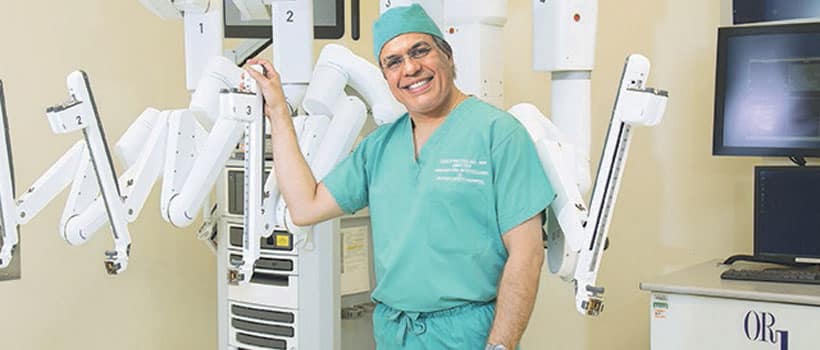
At the Miami Robotic Prostatectomy Center, Dr. Razdan frequently evaluates patients who were referred because of a slightly elevated PSA level. In many of these cases, further testing reveals that the fluctuation was caused by benign factors rather than prostate cancer.
Understanding what PSA actually measures — and why it can change — helps men avoid unnecessary fear and make better decisions about prostate health.
What PSA Actually Measures
PSA stands for Prostate-Specific Antigen, a protein produced by prostate cells.
Small amounts of PSA normally circulate in the bloodstream. Doctors measure PSA levels with a simple blood test to help evaluate prostate health.
Higher PSA levels can indicate prostate cancer, but PSA can also increase due to several non-cancerous prostate conditions.
That’s why Dr. Sanjay Razdan always emphasizes interpreting PSA trends rather than focusing on a single test result.
Looking at patterns over time often provides much more useful information.
Benign Prostatic Hyperplasia (BPH)
One of the most common reasons PSA levels fluctuate is benign prostatic hyperplasia (BPH).
BPH is a non-cancerous enlargement of the prostate that occurs naturally as men age.
As the prostate grows, it produces more PSA. This can cause PSA levels to rise gradually even when no cancer is present.
At his practice, Dr. Razdan frequently sees patients whose elevated PSA levels are caused by BPH rather than malignancy.
Evaluating prostate size through imaging and physical examination often helps clarify the situation.
Prostatitis (Prostate Inflammation)
Another major cause of PSA fluctuations is prostatitis, which refers to inflammation of the prostate gland.
Prostatitis can occur due to:
- bacterial infections
- pelvic inflammation
- urinary tract infections
- irritation of the prostate
Inflammation can temporarily cause PSA levels to increase significantly.
Once the inflammation resolves, PSA levels often return to normal.
Dr. Razdan carefully evaluates patients for signs of prostatitis before recommending more invasive testing.
Recent Ejaculation
Many men are surprised to learn that recent ejaculation can temporarily raise PSA levels.
Sexual activity within 24–48 hours before a PSA test may cause a small increase in PSA readings.
Because of this, Dr. Razdan often advises patients to avoid ejaculation for at least two days before PSA testing to ensure more accurate results.
Physical Activity That Affects the Prostate
Certain types of physical activity can also cause temporary PSA elevations.
Activities that place pressure on the prostate include:
- cycling
- horseback riding
- prolonged sitting on hard surfaces
These activities can irritate the prostate and produce small PSA increases.
Dr. Razdan frequently asks patients about recent physical activity when interpreting PSA results.
Recent Medical Procedures
Medical procedures involving the urinary tract or prostate can temporarily raise PSA levels as well.
Examples include:
- prostate biopsies
- catheter placement
- cystoscopy procedures
- urinary tract instrumentation
Because these procedures can artificially elevate PSA levels, doctors often wait several weeks before repeating PSA testing.
Dr. Razdan carefully reviews recent medical history to avoid misinterpreting these temporary changes.
Natural PSA Variability
Even in healthy men, PSA levels can fluctuate slightly from test to test.
This variability can occur due to:
- minor inflammation
- laboratory differences
- natural biological variation
For this reason, Dr. Sanjay Razdan rarely bases decisions on a single PSA test alone.
Instead, he evaluates:
- PSA trends over time
- patient age
- prostate size
- family history
- imaging results when necessary
This comprehensive approach helps avoid unnecessary biopsies and ensures that serious conditions are not overlooked.

When PSA Fluctuations Require Further Testing
Although many PSA changes are benign, some patterns do require closer evaluation.
Dr. Razdan may recommend additional testing when PSA levels show:
- rapid increases over time
- consistently high values
- abnormal physical exam findings
In these cases, further evaluation may include:
- prostate MRI imaging
- targeted prostate biopsy
- repeat PSA testing
Modern imaging techniques allow doctors to identify suspicious areas more accurately before performing biopsies.
Why Experience Matters in PSA Interpretation
One of the biggest challenges with PSA testing is interpretation.
Many factors can influence PSA levels, and not every increase means cancer.
That’s why patients often seek out Dr. Sanjay Razdan, who has decades of experience diagnosing and treating prostate disease.
His expertise in prostate cancer detection and robotic prostate surgery allows him to evaluate PSA results carefully and recommend appropriate next steps.
Rather than rushing into invasive procedures, Dr. Razdan focuses on accurate diagnosis and individualized patient care.
Frequently Asked Questions
Can PSA levels go up and down naturally?
Yes. PSA levels can fluctuate due to inflammation, physical activity, or other benign factors.
Does a high PSA always mean cancer?
No. Many conditions — including BPH and prostatitis — can cause PSA elevations.
Should PSA be repeated before further testing?
Often yes. Doctors frequently repeat PSA testing to confirm whether an elevation persists.
How can I prepare for a PSA test?
Avoid ejaculation, cycling, and prostate irritation for at least 48 hours before the test.
Why consult Dr. Razdan for PSA evaluation?
Dr. Razdan specializes in prostate disease diagnosis and uses advanced imaging and testing methods to determine the true cause of PSA changes.
Contact Dr. Sanjay Razdan
If your PSA levels have changed or you have concerns about prostate health, consulting with a prostate specialist can provide clarity and peace of mind.
Dr. Sanjay Razdan
Miami Robotic Prostatectomy Center
Website: https://miamiroboticprostatectomy.com
Phone: 1-305-251-8650
A consultation can help determine whether PSA fluctuations are benign or require further evaluation.